

7 Common Internal Combustion Forklift Operational Errors and How to Avoid Them
Release time: 2026-01-04
Internal combustion forklifts are widely used in warehousing, logistics, and industrial material handling due to their high load capacity and continuous operation capabilities. However, improper operation can not only reduce efficiency but also cause equipment damage or serious safety hazards.
By addressing these issues, companies can significantly enhance warehouse safety, protect their assets, and boost operational efficiency.
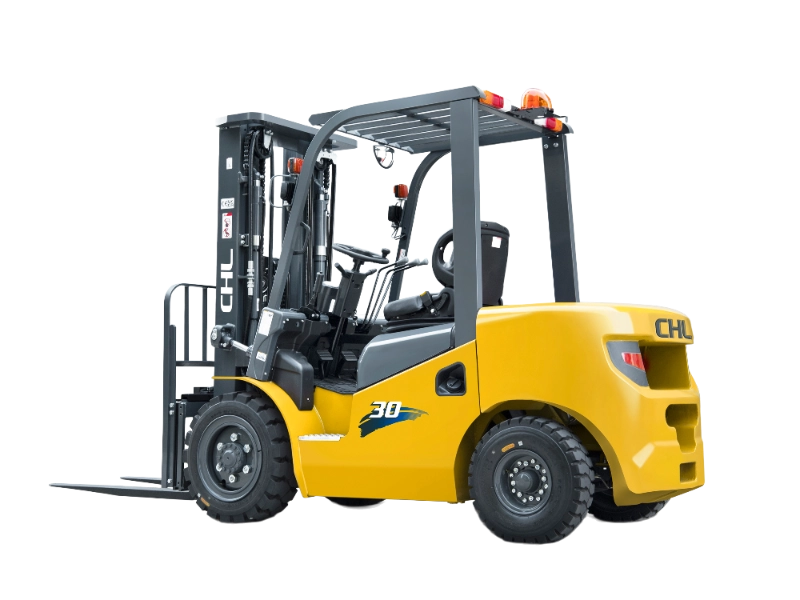
Table of Contents
1. Skipping Pre-Operation Inspections
Common Mistake:
Operators sometimes skip daily checks to save time or due to heavy workload.
Risks:
- Brake or steering system issues
- Hydraulic system failures
- Fluid leaks (oil, hydraulic, fuel) compromising safety
How to Avoid:
Always perform a pre-operation inspection before each shift, including:
- Brake and steering systems
- Tires and wheels
- Hydraulic fluid and fuel levels
- Lights and warning devices
A proper inspection routine can reduce malfunctions and extend the forklift’s service life.
2. Overloading or Ignoring Rated Load Capacity
Common Mistake:
Operators should never exceed the rated load capacity indicated on the forklift’s nameplate. Selecting the appropriate forklift model for the cargo weight is a fundamental safety step.
Risks:
- Forklift tipping or imbalance
- Dropping cargo
- Long-term damage to mast and hydraulic system
How to Avoid:
- Follow the rated load capacity on the forklift nameplate
- Choose the right forklift model for the weight of your cargo
- Understand that even slight overloading can drastically affect stability and safety.
3. Driving with Forks in the Wrong Position
Common Mistake:
Moving the forklift with forks raised too high or not fully inserted into the pallet.
Risks:
- Instability of the forklift
- Dropping cargo
- Restricted forward visibility, increasing collision risk
How to Avoid:
- Keep forks about 6–8 inches (15–20 cm) above the ground while moving
- Fully insert forks under the pallet
- Ensure the load is stable before driving
4. Erratic Maneuvering: Abrupt Turns, Acceleration, and Braking
Common Mistake:
Driving at high speed and making sharp turns or sudden stops in warehouse aisles is a dangerous practice.
Risks:
- Forklift tipping
- Cargo shifting or falling
- Increased wear on tires and suspension
How to Avoid:
- Control driving speed
- Slow down when turning, and operate smoothly
- Exercise increased caution on ramps, in narrow aisles, and around corners
5. Improper Operation on Ramps or Uneven Surfaces
Common Mistake:
Driving sideways on ramps or parking incorrectly on sloped or uneven surfaces.
Risks:
- Forklift rolling or sliding
- Loss of balance leading to tipping
How to Avoid:
- Always drive with the load facing uphill on slopes
- Avoid turning on ramps
- Apply the parking brake and chock wheels if necessary
6. Ignoring Ventilation and Emission Management
Common Mistake:
Using internal combustion forklifts for long periods in poorly ventilated warehouses.
Risks:
- Accumulation of exhaust gases
- Potential operator health issues from carbon monoxide (CO) exposure
- Non-compliance with safety and environmental regulations
How to Avoid:
- Ensure proper warehouse ventilation
- Consider a mix of electric and internal combustion forklifts for indoor use
- Regularly check engine emission systems
7. Insufficient or Incomplete Operator Training
Common Mistake:
Operators work without professional training or rely solely on experience.
Risks:
- Development of unsafe work habits.
- Low safety awareness
- Higher risk of accidents
How to Avoid:
- Provide comprehensive forklift operation training
- Conduct regular safety refresher courses
- Establish clear operation standards and responsibility guidelines
- Ensure all operators are certified and their credentials are up-to-date
In conclusion, adhering to safe and standardized operating procedures is paramount. It not only maximizes forklift performance and warehouse efficiency but, most importantly, protects personnel and assets. By avoiding these 7 common mistakes, businesses can reduce safety risks, extend equipment lifespan, and improve overall warehouse productivity.
For high-intensity warehousing and logistics environments, proper operation is as important as selecting high-quality warehouse forklift equipment to maintain efficiency and reduce safety risks.