

Five Tips for Choosing Electric Forklifts for Indoor Applications
Release time: 2026-08-31
For indoor warehouses and production workshops, forklift selection is often limited by factors such as space, shelving, goods, and work rhythm. A forklift suitable for heavy-duty outdoor operations may not be suitable for narrow warehouse aisles; similarly, a compact electric forklift may not meet the requirements of high-bay racking and long-term continuous operation. Electric forklifts, with their zero emissions, low operating noise, and good indoor maneuverability, have become common material handling equipment in warehousing and manufacturing companies. For purchasing personnel, the real focus should not be “which forklift is the best,” but rather “which forklift is best suited to their working environment.” This article will outline key considerations when selecting an indoor electric forklift from five aspects: load capacity, vehicle size, lifting height, battery system, and safety features.
I. Choosing the Appropriate Rated Load Capacity Based on Cargo Weight
Rated load capacity is the first parameter to confirm when selecting an electric forklift.
Companies should first calculate the weight of goods handled daily and determine the maximum load in actual operation. For example, daily warehouse handling might primarily involve goods weighing around 1.5 tons, but occasionally heavier pallets need to be handled. In such cases, selecting equipment solely based on average weight is insufficient.
The load center also needs to be considered. When the goods are large and the center of gravity is far from the forks, the actual weight the forklift can carry may be affected.
Therefore, overseas buyers should confirm the following when purchasing:
Maximum load weight;
Common load weight;
Cargo dimensions;
Load center distance;
Actual lifting height.
A reasonable rated load can prevent long-term overloading and avoid increasing procurement and operating costs due to blindly selecting oversized models.
II. Selecting Vehicle Size Based on Warehouse Aisle Dimensions
One of the biggest characteristics of indoor warehouses is limited space.
If the warehouse uses a racking storage system, forklifts need to maneuver, retrieve, and stack goods within a limited aisle width. Therefore, vehicle width, minimum turning radius, and overall length are all crucial.
For narrow aisle warehouses, electric forklifts with more compact bodies and greater maneuverability should be prioritized. If the warehouse aisles are wide, equipment of appropriate size can be selected based on load capacity and operational efficiency.
Before purchasing, it’s best to measure directly:
Aisle width + rack spacing + doorway dimensions + turning area.
Don’t judge solely based on the forklift dimensions provided by the supplier; instead, confirm the actual operating space after the equipment enters the warehouse.
III. Determine Lifting Capacity Based on Racking Height
If the electric forklift is primarily used for stacking goods inside the warehouse, then lifting height is a crucial factor.
Companies need to determine the height of the highest rack level and the required working height for goods during actual stacking. Simultaneously, the impact of goods size and mast structure on the lifting space must be considered.
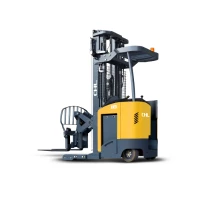
For standard low-bay racking, standard configurations may be sufficient; however, for high-bay warehouses, forklifts with higher lifting capacities should be selected, or reach trucks or other equipment better suited for high-level access should be considered.
It’s important to note that maximum lifting height does not guarantee the rated load can be maintained at all heights. During procurement, check the forklift’s load chart and confirm the equipment’s safe load-bearing capacity based on the actual lifting height.
IV. Choosing a Battery and Power System Based on Work Intensity
The range of an electric forklift is closely related to the daily workload of a business.
If the forklift only operates for a few hours a day, a basic battery configuration may be sufficient. However, for scenarios requiring long-term continuous operation, such as logistics centers and manufacturing plants, it is crucial to focus on battery capacity, charging time, battery type, and charging infrastructure.
Currently, electric forklifts on the market can utilize different types of battery technologies, such as lead-acid and lithium batteries.
Lithium batteries typically feature higher charging efficiency and relatively lower maintenance requirements, making them more suitable for some high-frequency indoor operations; lead-acid batteries, on the other hand, are mature and widely used.
Therefore, businesses need to choose the appropriate power solution based on daily working hours, number of shifts, charging conditions, and budget.
V. Focusing on Safety and Operational Comfort Based on the Indoor Environment
Indoor forklifts often need to work alongside personnel, racks, pallets, and other handling equipment; therefore, safety is also a crucial consideration in procurement.
Key considerations include:
Driver visibility;
Braking system;
Steering system;
Mast stability;
Warning lights and buzzers;
Reversing assist system;
Speed control function;
Emergency stop function.
If the forklift requires long hours of daily operation, operator comfort is also important. The layout of the seat, control handles, steering wheel, pedals, and driver’s space all affect operator fatigue.
For densely populated warehouse environments, appropriate safety assistance functions should be configured according to local regulations and company safety standards.
How to determine if an electric forklift is suitable for your warehouse?
In the actual procurement process, a simple logic can be used:
Cargo weight → Pallet size → Rack height → Aisle width → Operating time → Battery solution → Safety features.
First, confirm the cargo and pallets, then determine the warehouse space and lifting requirements, and finally, select the battery and vehicle configuration based on the daily workload.
This selection method avoids simply comparing forklift prices and reduces problems such as “buying equipment only to find it can’t fit into the aisle” or “the battery life is insufficient for a shift.”
Whether an electric forklift can fulfill its full potential ultimately depends on its compatibility with the actual warehousing environment. When purchasing, instead of comparing maximum load, maximum lifting height, or battery capacity in isolation, it’s more effective to evaluate factors such as cargo weight, pallet size, aisle width, rack height, daily operating hours, and the working environment for personnel. For warehouses with high usage frequency, further considerations include battery life, charging efficiency, ease of maintenance, and long-term operating costs. By making a comprehensive selection based on actual working conditions, companies can not only improve indoor material handling efficiency but also reduce issues such as equipment idleness, mismatched configurations, and excessive long-term operating costs, ensuring that electric forklifts truly serve the long-term optimization of warehousing processes.